Certificates for low-carbon cement and concrete, backed by public data on the Registry.
Certify, Isometric's AI-powered certification platform, uses agents to review the evidence and check every data point, so certification keeps pace with production and procurement cycles.
Every certificate is backed by protocols developed by the largest Science Team of any certifier, quantifying emissions for each facility and production method.
Isometric publishes the data and calculations behind every certificate on the public Registry. Anyone can check the evidence themselves.
Isometric is accredited by ICVCM, CORSIA, and ICROA, and has nine protocols approved to use the Core Carbon Principles label.
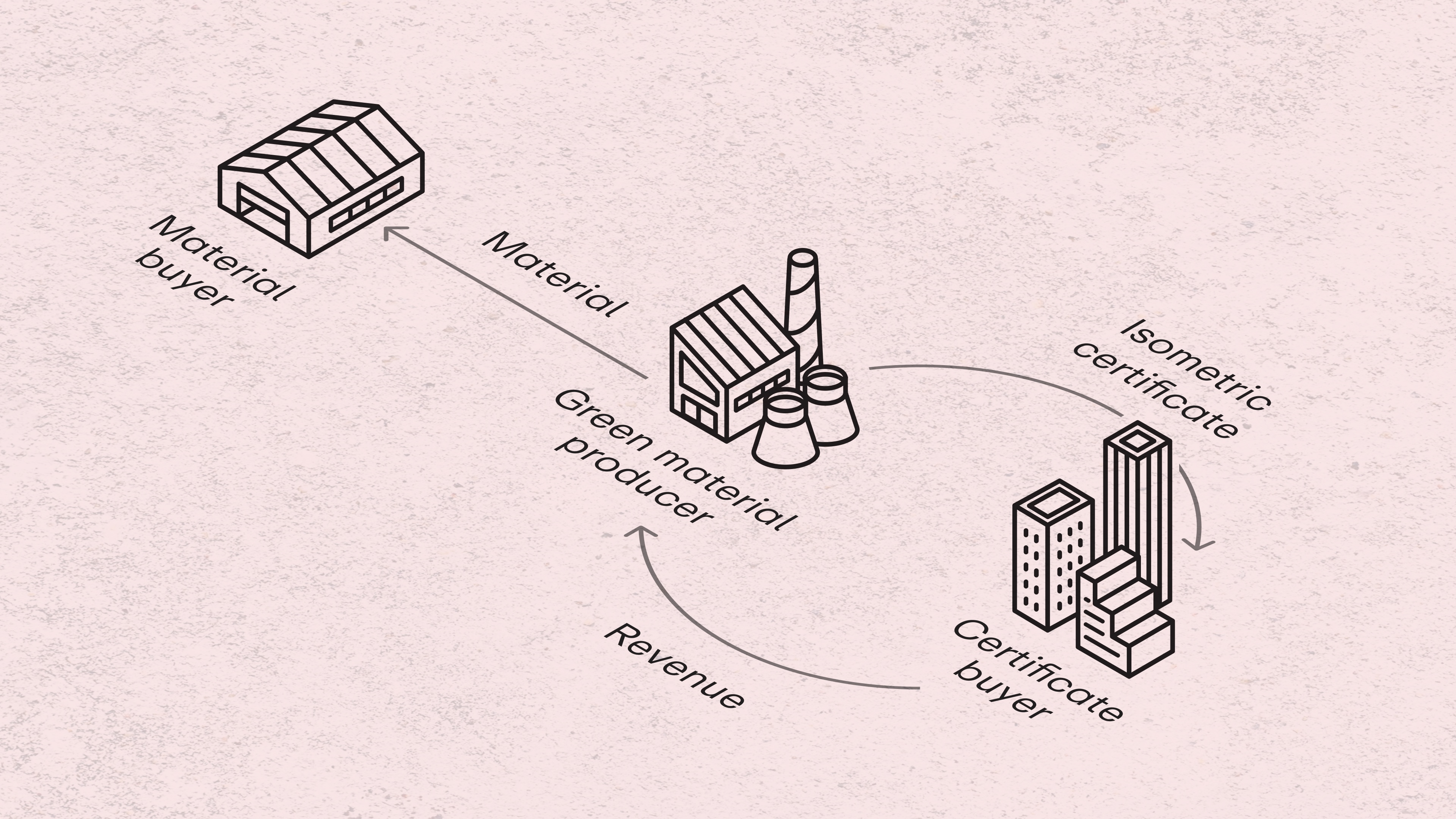
Isometric certifies low-carbon materials for construction, manufacturing, and infrastructure. Book and claim separates the environmental attribute from the physical product, so a verified certificate can be sold and retired independently of where the material is produced or used.
Every project follows the same path set out in the Isometric Standard, from eligibility to certificates on the public Registry.
Isometric confirms the project meets the Standard and protocol requirements.
The project's design is published so scientists, industry experts, and the public can comment on it.
An independent verifier, chosen by Isometric, reviews the design and visits the site.
Certify and an independent verifier review the evidence behind every certificate.
Certificates are issued on the public Registry, with the data behind them.

Certify, Isometric's AI-powered platform, works alongside independent verifiers to review every data point behind a claim, not just a sample, doing in hours what used to take months.
Explore CertifyProject developers upload data, records, and measurements.
AI agents read every submission and cross-check the evidence.
An independent verifier reviews and makes every decision.
Certificates are issued and recorded on the public Registry.
Low-carbon materials, like cement and steel, are made with far fewer emissions than conventional production. Steel and cement account for around 14% of global carbon emissions. The technologies to reduce them exist, but they need reliable revenue to scale.
Isometric certifies low-carbon clinker, cement, and concrete under its Low Carbon Cement Protocol. A protocol for low-carbon steel is in development.
A carbon removal certificate represents one tonne of carbon dioxide removed from the atmosphere. An Environmental Attribute Certificate (EAC) represents the lower emissions of a certified low-carbon material, such as cement, compared with the conventional alternative. Unlike carbon removal certificates, EACs expire, so a claim can't be made long after the material was produced.
Only the organization named when an EAC is retired can claim its environmental benefits. Owning an EAC is not enough on its own. Isometric also allows co-claiming, so more than one organization can be named on a single retirement, as long as their claims don't overlap.
Once an EAC is sold separately, the physical material is treated as conventional. The buyer of the material can't claim its lower emissions or describe it as low emission, unless they are also named when the EAC is retired.
Certify, Isometric's AI-powered platform, works alongside independent verifiers to review every data point behind a claim, not just a sample, doing in hours what used to take months. Its agents surface anything that needs attention, and the verifier makes every decision before a certificate is issued. Certify also includes Remi, an AI assistant that helps project developers prepare their submissions.
Fast, accurate certification for project developers and buyers.